
Share Brian Whiteley's obituary with others.
Invite friends and family to read the obituary and add memories.
Stay updated
We'll notify you when service details or new memories are added.
You're now following this obituary
We'll email you when there are updates.
Select your format and elements to print

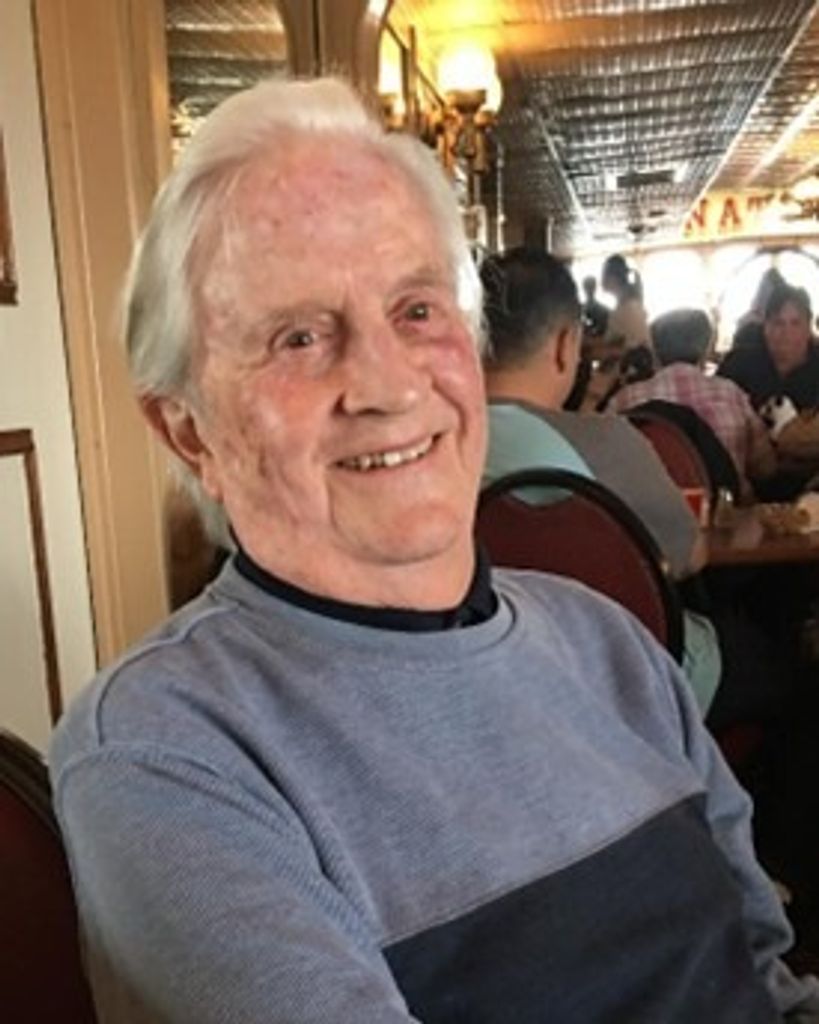


Brian Whiteley
Dec 11, 1930 — Dec 16, 2025
Arthur Brian Whiteley passed peacefully at the age of 95 in Marietta, GA, USA on December 16, 2025, with his loving wife Tracy by his side. He is preceded in death by his father Joseph Whiteley, his mother Hilda (Gee) Whiteley, and his older brother, John Whiteley, who died in infancy. Other surviving family members are his five children Caroline Whiteley Aldred, Anne Whiteley Hunt, Iain Whiteley, Richard Whiteley, and Joanna Whiteley Huxley; plus a host of grandchildren and great-grandchildren.
Brian lived an extraordinary life. He was born in the small village of Ripponden, in the county of Yorkshire, in the north of England. His father ran the local grocery store and later became head of the food co-op in the area. His mother was an instrumental partner in all of this. Brian grew up watching his father serve their friends and neighbors at the grocery and taking long walks across the Yorkshire Moors. Both parents came from humble beginnings (his mother grew up on a sheep farm!) but they never wavered in supporting and encouraging Brian to have adventures and see the world. It was common for young men of that era to take off backpacking across Europe for the summer, and Brian actually did this for two summers as a teenager – by himself, hitch-hiking with people from all countries, eating ham sandwiches along the side of the road, and pitching his tent at night wherever he ended up from his travels that day.
Brian attended Heath Grammar School in Halifax, where he discovered he had a knack for languages. He became fluent in French from his studies, as well as spending summers with a French exchange student who became a lifelong friend. He later graduated with a degree in Modern Languages from the University of Manchester in England. He also studied at the famous Sorbonne University in Paris, dining at night on steak-frites and wine with his fellow students. He also became fluent in German, which helped him greatly in his future career.
It was during his time at the University of Manchester that he became a loyal fan of his beloved Manchester United soccer team. Even after he moved to the US, no matter how early the game was being played on US time, he was up and cheering his team on.
After University, he joined the British Army, which he said taught him both how to follow instructions and how to be a leader. He looked at Queen Elizabeth II as his Commander-In-Chief. For the rest of his days, he always said that if she had given out a call for him to take up arms – no matter what age he was - he would have done it. He was an officer in the Royal Horse Artillery, a unit originally formed in 1793 to give fast mobile fire support. Officers were still required to qualify in horsemanship by riding an obstacle course bareback, with their hands behind their back. Despite not using horses in battle, officers were expected to keep their skills and he was very fond of his Horse, Lucky II. Stationed in Germany, he called the orders to lay and fire the guns on the Gun Line.
On leaving the Regular Army, he joined the Territorial (or reserve) Army. He was a Troop Commander in 101 Field Regiment, Royal Artillery, a unit which recruited from Newcastle and Northumberland (England's most Northern County). Most of his men were from Blyth, a mining town on the coast: tough men who grafted hard, mining coal from under the North Sea. He was very proud of them and had a deep and lasting affection for these hard-working 'Geordies', as the locals are known. They drank as hard as they worked. At the two-week Annual Battle Camp at Otterburn on the Northumbrian Moors, he arranged for two truck loads (drays) of their beloved Newcastle Brown Ale to accompany them.
His gunners drank it all the first week, so he had to send for two more drays to cover the second week! Forever after that, when he ordered beer in a restaurant, it was always a Newcastle Brown Ale in honour of his Regiment of men from the North.
After his Army service, Brian began a career overseeing manufacturing plant operations with food companies. His second job in that field was with General Foods International Division, where he oversaw production of brands like Maxwell House Coffee and Jello all over the world. The company soon saw his talent for leadership and management, and he was sent to Germany to run the operations there. This was not an easy assignment since he was an Englishman as Head of Operations at a large company in post-World War II Germany. Being fluent in German helped greatly, plus his natural ability to lead and connect with people.
After successfully heading up Operations in Germany, General Foods sent him to Brazil. He didn’t speak Portuguese, so his colleagues there spoke English when he was around. But he knew he needed to be able to speak to them in their language to be successful there. So every day at 3 o’clock, he had a teacher come to the office to teach him Portuguese. After three months of lessons, he told everyone in the office “no more English, we are only speaking Portuguese now!”
One of the brands Brian was overseeing production of in Brazil was Kibon ice cream, the leading brand there, with over 80% market share. His connection with Kibon lead to him being instrumental in saving the entire country of Brazil…
When Brian arrived in Brazil in the mid-1970’s, there was a deadly outbreak of viral meningitis. Thousands had died that first year with no vaccine to overcome it and no hope in sight. By the next year, the Brazilian government was able to get a vaccine for it from France, but it had to be kept at -30 C during transport and storage once it arrived in Brazil, and they had no way to do that. So it was a very dire situation and no one knew what to do – except for Brian! His ice cream trucks and storage facilities for Kibon ice cream were kept at -30 degrees, so he had the perfect scenario for the vaccine’s transport and storage. He called up the Brazilian Minister of Health office and offered his entire fleet of trucks and hundreds of storage drop-off points across the country. A huge coordination effort followed between his employees, the Brazilian government, and doctors and nurses all across the country. Within a short time, the vast majority of the country was vaccinated, saving countless lives. Brian received the Order of Merit from Brazil’s Minister of Health for this crucial service to the country in helping them overcome the epidemic.
After his years in Brazil, he was offered a position in the US at the Headquarters of General Foods’ International Division in Connecticut. He became a US citizen soon after, while still retaining his British citizenship. But even though he’d gotten his US citizenship, he was always a Brit at heart, and even deeper than that, a Yorkshireman! After he retired, he became a real estate broker in both NC and SC and continued to live the adventurous life he had always experienced, staying connected with family and friends around the world.
Brian travelled the world through his work with General Foods. He loved that part of his life, and was blessed to be able to stay in all the finest hotels, eat at the finest restaurants, and experience so many different cultures and people of the world.
He had countless fantastic stories, from his adventures with his family, friends, and co-workers. He deeply loved his children and grandchildren, and was enormously proud of all their accomplishments. He loved being able to speak with so many people he met along the way in their own language. He was a great athlete, ran several marathons, and excelled in golf, football (soccer to Americans), rugby, cricket, skiing and tennis. He loved to read and keep up with world news, he could size people up in a heartbeat, and he was great at reciting raunchy Limericks. He loved fish and chips, a good leg of lamb, Yorkshire pudding with gravy, and a well-poured glass of Chardonnay. He had just turned 95, and his mind was as sharp then as it was in his younger years. He was even in the process of learning both Italian and Swedish online during his last two years! Anyone who met him never forgot him because of his engaging personality and his zest for life.
One of Brian’s stories:
"Brian talked often about his time growing up during WWII. He was like a living history book! Along with many other families in the British countryside, his family welcomed a little boy from London to live with them while the bombings were going on there. His father had to deal with the food rationing through his work at the Grocery. Those wartime experiences really shaped their whole lives. Below is a little story that Brian wrote about that time from a schoolboy’s perspective…
This story is about my life as a boy at school in England during the war. Because we were afraid of gas attacks by the German air force we were obliged to carry a gas mask every day to school and keep it beside our desks.
Once per week we had to practice putting on our gas masks and the whole class looked like baby elephants. The funny thing is that the master continued to teach the class and nobody could answer a question. But what we could do was to blow out from inside the gas mask and make a noise, which sounded like a rude expulsions of gas from our backsides and the whole class would then end in uproar.
Fortunately, the day never came when we really needed to use those devices and on one happy day we threw them away forever and burned them in a big bonfire and celebration of the end of the war. I could not believe my parents and I and my friends could live in safety for future years. We still needed to use our ration books for another two years because of shortage of food and supplies. But as Winston Churchill had said - we would never give up and we never did.
That is the end of my short story. I hope you liked it. Keep calm and carry on."
~ Brian Whiteley
Guestbook
Visits: 52
This site is protected by reCAPTCHA and the
Google Privacy Policy and Terms of Service apply.
Service map data © OpenStreetMap contributors